

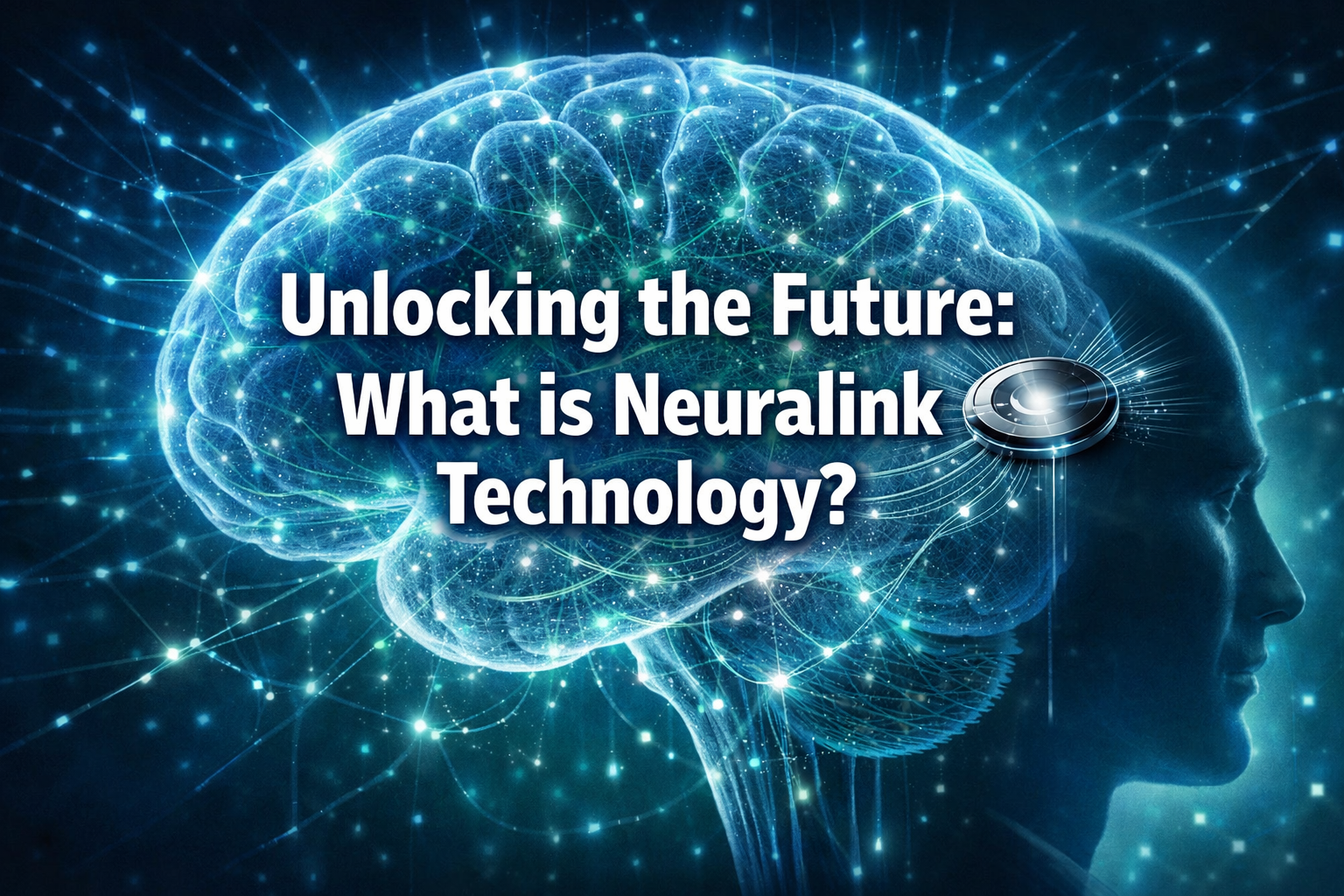
Imagine a future where thought alone can control advanced machinery, where debilitating neurological conditions are a thing of the past, and where human intellect can seamlessly interface with artificial intelligence. This isn’t science fiction from a bygone era; it’s the audacious vision driving **Neuralink technology**. In 2026, as the world witnesses rapid advancements in biotechnology, understanding what is Neuralink technology has become more critical than ever. This groundbreaking endeavor aims to forge a direct, high-bandwidth connection between the human brain and computers, promising to revolutionize medicine, enhance human capabilities, and redefine our interaction with the digital world. Join us as we delve deep into the intricacies of this revolutionary brain-computer interface, exploring its components, applications, and the profound implications it holds for humanity.
Key Takeaways
- Neuralink Technology is a cutting-edge brain-computer interface (BCI) aiming to create a direct digital link between the brain and external devices.
- The core component is the ‘Link’ implant, which uses thousands of ultra-fine ‘threads’ to read and stimulate neural activity, surgically placed by a specialized robot.
- Initial applications focus on medical restoration, such as treating paralysis, blindness, and other neurological disorders by enabling thought-controlled interaction.
- Long-term goals include human augmentation, potentially enhancing cognitive abilities, memory, and facilitating advanced communication.
- Significant ethical, safety, and regulatory challenges remain, despite rapid progress in human clinical trials as of 2026.
The Core Concept: Deconstructing What is Neuralink Technology
At its heart, **what is Neuralink technology** fundamentally represents a sophisticated brain-computer interface (BCI). Unlike earlier, more rudimentary BCIs that often relied on bulky external sensors or limited electrode arrays, Neuralink’s approach is distinguished by its ambition for high-bandwidth, direct neural interfacing. The company, founded by Elon Musk in 2016, aims to develop an implantable device that can both read neural signals from the brain and write information back into it, creating a bidirectional communication channel.
The primary goal is to address severe neurological disorders and eventually expand human capabilities. Think about individuals suffering from paralysis who could control a computer cursor or a robotic arm merely by thinking about it. Or perhaps people with vision impairment regaining some form of sight through direct brain stimulation. This foundational purpose underpins the entire engineering and scientific effort behind Neuralink.
The system is designed to be fully implantable, cosmetically invisible, and capable of wireless communication. This ensures that once integrated, it becomes a seamless extension of the user, rather than an external apparatus. The vision is not just about control, but about a truly integrated, intuitive experience that feels natural to the user.
The Link and Its Threads: Key Components of Neuralink Technology
The physical manifestation of **what is Neuralink technology** revolves around two main components: the ‘Link’ and the ‘threads’.
- The Link: This is a small, coin-sized implantable device designed to sit flush with the skull. It contains ultra-low-power custom chips that process neural signals, a battery that can be wirelessly charged, and a Bluetooth radio for communicating with a nearby external device (like a smartphone or tablet). The Link is encased in a biocompatible material to ensure it integrates safely within the body without rejection.
- The Threads: These are incredibly fine, flexible electrode arrays, thinner than a human hair (about 5 microns in diameter). Each thread contains multiple electrodes, capable of detecting electrical signals from individual neurons. A single Neuralink implant can deploy thousands of these threads, allowing it to record from a vast number of neurons across different brain regions simultaneously. This high electrode count is critical for achieving high-bandwidth data transfer. The flexibility of the threads is a key innovation, as it reduces the risk of tissue damage caused by rigid electrodes moving relative to the softer brain tissue.
The combination of the compact, powerful Link device and the numerous, flexible threads is what sets Neuralink apart, promising unprecedented precision and scope in brain-computer interfacing.
The Surgical Precision: Implanting Neuralink Technology
One of the most remarkable aspects of **what is Neuralink technology** is the method of its implantation. Given the delicate nature of brain tissue and the precision required to insert thousands of microscopic threads, a human surgeon performing the procedure manually would be incredibly challenging, if not impossible. This led Neuralink to develop a sophisticated robotic surgical system.
The robot is a marvel of engineering, equipped with advanced optics, precision mechanics, and computer vision algorithms. Its primary function is to accurately insert the flexible threads into the brain’s cortex, avoiding blood vessels and minimizing trauma to the surrounding tissue. The process involves:
- Skull Removal: A small section of the skull is temporarily removed, approximately the size of a coin.
- Thread Insertion: The robot precisely inserts each thread, one by one, into the specified depth within the brain. Each thread is carefully maneuvered to ensure optimal placement for neural signal recording.
- Device Placement: The Link device is then placed into the opening in the skull, with its threads extending into the brain.
- Skull Replacement: The skull portion is replaced, and the skin is closed, making the entire device virtually invisible once the procedure is complete.
This robotic surgical approach is crucial for scalability, safety, and precision. It aims to make the implantation procedure as routine and safe as possible, reducing the risks typically associated with neurosurgery.
Related Posts:
- What is CAR-T Technology? Unlocking the Power of…
- What Is Automation Engineering Technology The Future…

- Is Information Technology a Good Course Career…

- What Is Modern Agriculture Technology Innovations in Farming

- How Does Infrared Technology Work Sensing Heat and Data

- What Does a Director of Technology Do Leadership in Tech

From Concept to Reality: Early Human Trials in 2026
As of 2026, Neuralink has made significant strides, moving from animal testing to early human clinical trials. The first human recipient, known as Noland Arbaugh, a quadriplegic, received the Neuralink implant in January 2024. His progress, publicly demonstrated, showcased his ability to control a computer cursor and play digital games solely with his thoughts [1].
These early trials, conducted under strict regulatory oversight (such as the FDA in the United States), are crucial for:
- Safety Assessment: Monitoring the device’s biocompatibility, surgical complications, and long-term effects on brain tissue.
- Efficacy Evaluation: Quantifying the device’s ability to accurately record and transmit neural signals, and how effectively users can control external devices.
- System Optimization: Identifying areas for improvement in both the hardware and software algorithms that translate brain signals into commands.
The ongoing trials provide invaluable data, shaping the future development and refinement of **what is Neuralink technology** and bringing it closer to broader application.
Transformative Applications: What is Neuralink Technology Capable Of?
The potential applications of **what is Neuralink technology** span a wide spectrum, from revolutionary medical treatments to the audacious prospect of human augmentation. These applications can be broadly categorized into restorative and augmentative.
Restorative Applications: Healing and Restoring Function
The immediate and most ethically straightforward applications of Neuralink technology lie in restoring lost neurological functions. This area has the potential to significantly improve the quality of life for millions:
- Treating Paralysis: Enabling individuals with paralysis to control external devices like computers, smartphones, and robotic prosthetics directly with their thoughts. This offers a new level of independence and communication.
- Restoring Vision and Hearing: By bypassing damaged sensory organs and stimulating the visual or auditory cortex directly, Neuralink could potentially restore a form of sight or hearing to those with severe impairments. Imagine direct neural input from a camera feeding into the visual cortex.
- Addressing Neurological Disorders: Conditions such as Parkinson’s disease, epilepsy, and even depression could potentially be managed or treated by precisely modulating neural activity. For example, deep brain stimulation (DBS) is already used for Parkinson’s, and Neuralink could offer a far more precise and adaptive solution.
- Memory Restoration: For individuals suffering from memory loss due to stroke, trauma, or neurodegenerative diseases like Alzheimer’s, Neuralink might eventually offer ways to record, enhance, or even implant memories, though this remains a highly experimental and complex area.
These restorative capabilities alone represent a monumental leap in medical technology, offering hope where traditional treatments have limitations.
Augmentative Applications: Enhancing Human Capabilities
Beyond restoration, the long-term vision for **what is Neuralink technology** ventures into human augmentation. This is where the concept becomes more controversial and futuristic, but also where its potential for transforming human existence truly lies:
- Cognitive Enhancement: Could Neuralink boost memory, learning speed, or problem-solving abilities by directly interfacing with neural networks? The idea is to offload cognitive tasks to digital processors or even integrate vast amounts of information directly into the brain.
- Direct Digital Interaction: Imagine browsing the internet, sending emails, or coding directly with your thoughts, without the need for screens, keyboards, or voice commands. This would create an unprecedented level of immersion and efficiency.
- Brain-to-Brain Communication: In its most advanced form, Neuralink could enable direct, non-verbal communication between individuals, a form of telepathy facilitated by digital transmission.
- Human-AI Symbiosis: Elon Musk often speaks of “symbiosis with AI” as a way for humans to keep pace with advancing artificial intelligence. Neuralink could be the bridge, allowing for seamless integration and co-evolution with AI systems.
While these augmentative applications are still largely theoretical and subject to immense ethical debate, they represent the ultimate horizon for Neuralink technology.
Ethical, Safety, and Societal Considerations of Neuralink Technology
As revolutionary as **what is Neuralink technology** appears, its development and deployment raise a myriad of complex ethical, safety, and societal questions that demand careful consideration.
Safety Concerns and Medical Risks
Any invasive brain procedure carries inherent risks:
- Surgical Complications: Despite robotic precision, risks like infection, hemorrhage, and adverse reactions to anesthesia are always present.
- Brain Tissue Damage: While flexible threads aim to minimize damage, the long-term effects of thousands of foreign objects implanted in the brain are not yet fully understood. Inflammation, scar tissue formation (gliosis), and device migration are potential concerns.
- Device Malfunction: Electronic devices can fail. A malfunction could lead to loss of function, unexpected neural stimulation, or require further surgery for removal or replacement.
- Long-Term Biocompatibility: The body’s immune system might eventually react to the implant, potentially leading to rejection or chronic inflammation over decades.
- Cybersecurity and Hacking: A direct link to the brain poses unprecedented cybersecurity challenges. The thought of a brain-computer interface being hacked, potentially altering perceptions, memories, or behaviors, is a profound concern.
Ethical Dilemmas and Societal Impact
Beyond immediate safety, Neuralink technology opens up profound ethical and societal debates:
| Ethical Area | Description of Concern |
|---|---|
| Data Privacy and Ownership | Who owns the neural data recorded by the device? How is it protected from misuse, commercial exploitation, or governmental access? This is deeply personal and sensitive information. |
| Identity and Autonomy | How might a direct brain-computer link affect an individual’s sense of self, autonomy, and free will? Could external influences, intentional or otherwise, alter a person’s identity or decision-making? |
| Equity and Access | If Neuralink provides significant cognitive or physical advantages, who will have access to this technology? Could it exacerbate existing social inequalities, creating a divide between “augmented” and “non-augmented” humans? |
| Informed Consent | Given the novelty and complexity, can individuals truly give fully informed consent for a brain implant whose long-term effects are unknown? |
| Human Augmentation Limits | Where do we draw the line on human enhancement? What constitutes a “natural” human experience, and should we alter it? |
These questions are not easy to answer and require ongoing dialogue among scientists, ethicists, policymakers, and the public as **what is Neuralink technology** evolves.
The Future of Neuralink Technology: 2026 and Beyond
As of 2026, Neuralink technology is still in its nascent stages of human application, yet the pace of development is rapid. The initial focus remains squarely on validating the device’s safety and efficacy for severe medical conditions. However, the long-term trajectory outlines a vision that could fundamentally alter human interaction with technology and with each other.
Roadmap for Neuralink Technology in the Coming Decade
The next 5-10 years for Neuralink will likely involve several critical phases:
- Expanded Clinical Trials: Moving beyond initial safety trials to larger cohorts of patients, exploring different neurological conditions, and gathering more robust efficacy data. This will be crucial for regulatory approval for broader therapeutic use.
- Device Refinement: Continuous improvement of the Link’s battery life, processing power, wireless range, and the longevity and flexibility of the threads. Minimizing device footprint and invasiveness will also be key.
- Software and Algorithm Development: The sophistication of translating neural signals into actionable commands and vice versa is paramount. AI and machine learning will play an increasingly vital role in making the interface intuitive and reliable.
- Regulatory Approvals: Securing approvals from bodies like the FDA will be a major hurdle, requiring extensive data on long-term safety and benefit.
- Scalability and Accessibility: Once proven safe and effective, the challenge will shift to manufacturing at scale and making the technology accessible and affordable, initially for medical use.
The Broader Impact: Merging Biology and AI with Neuralink Technology
Ultimately, the trajectory of **what is Neuralink technology** points towards a future where the line between human and machine blurs. It represents one of the leading efforts to explore human-AI symbiosis, offering a pathway for humans to potentially enhance their cognitive capabilities and navigate an increasingly AI-driven world. The implications could touch every facet of society:
- Education: Instant access to information and enhanced learning capabilities.
- Work: New forms of human-machine collaboration, potentially transforming industries.
- Communication: Revolutionizing how we interact, potentially leading to richer, more direct forms of understanding.
- Entertainment: Fully immersive virtual reality experiences controlled by thought.
However, realizing this future responsibly will require proactive ethical frameworks, robust cybersecurity, and a global conversation about the kind of future we wish to build with such powerful technology.
Defined Term: Brain-Computer Interface (BCI)
A Brain-Computer Interface (BCI) is a direct communication pathway between an enhanced or wired brain and an external device. BCIs aim to translate brain activity into commands that can control a computer or other technology. They can be invasive (requiring surgery, like Neuralink), semi-invasive, or non-invasive (e.g., EEG headsets). The field of BCIs, including what is Neuralink technology, is rapidly advancing, offering new possibilities for medical treatment and human augmentation.
Frequently Asked Questions About Neuralink Technology
The primary goals of Neuralink technology are multifaceted. Initially, it aims to restore lost functions for individuals with severe neurological conditions, such as paralysis, blindness, and deafness. This includes enabling direct brain control of computers and prosthetic limbs. Long-term, Neuralink envisions a future where its technology could facilitate human augmentation, allowing for enhanced cognitive abilities, direct brain-to-brain communication, and a symbiotic relationship between humans and artificial intelligence.
Neuralink technology is implanted through a highly precise surgical procedure performed by a sophisticated robotic system. This robot is designed to carefully remove a small piece of the skull, insert the ultra-fine ‘threads’ into the brain’s cortex, and then place the Link device flush with the skull, ensuring the bone is replaced to conceal the implant. The goal is a minimally invasive procedure with high accuracy, minimizing damage to surrounding tissue and allowing for potential future upgrades.
As with any invasive medical procedure, there are potential risks associated with Neuralink technology. These include surgical risks such as infection, bleeding, and adverse reactions to anesthesia. Specific to brain implants, risks involve potential damage to brain tissue, inflammatory responses, device malfunction, and the long-term effects of having foreign material in the brain. Ethical concerns also arise regarding data privacy, security, and the societal implications of human augmentation.
The widespread availability of Neuralink technology is still some time in the future. As of 2026, the technology is in early human clinical trials, focusing on safety and initial efficacy in specific patient populations. Extensive further testing, regulatory approvals (such as from the FDA), and refinement of the technology are required before it can be made available to the broader public. While progress is being made rapidly, a realistic timeline for widespread access is likely several years, if not a decade, away.
How to Understand Neuralink Technology in 5 Steps
Grasp the Core Concept
Begin by understanding that Neuralink technology is essentially a brain-computer interface (BCI) designed to create a direct communication pathway between the human brain and external digital devices. Its primary aim is to translate neural signals into actionable commands and vice-versa, facilitating control and data transfer. This foundation is crucial to comprehending what is Neuralink technology at its heart.
Learn About the Device and Implantation
Next, delve into the physical components: the ‘Link’ implant and the ultra-fine ‘threads’ that connect to neurons. Understand that these threads are surgically implanted with high precision by a specialized robot. The design focuses on miniaturization and high-bandwidth data transmission, distinguishing it from earlier BCI attempts.
Explore Applications and Benefits
Investigate the wide array of potential applications. Initially, focus on medical benefits for conditions like paralysis, blindness, and neurological disorders. Then, consider the long-term vision of human augmentation, including enhanced cognition and direct digital interaction, which highlights the ambitious scope of what is Neuralink technology.
Consider the Ethical and Safety Aspects
It’s vital to explore the significant ethical considerations, including data privacy, security, and the potential for misuse. Understand the inherent risks of brain surgery and long-term device implantation. Balancing innovation with responsible development is a key challenge.
Stay Updated on Progress and Future Outlook
Finally, recognize that Neuralink is a rapidly evolving field. Keep an eye on clinical trial results, regulatory approvals, and public demonstrations to understand its trajectory. The future of Neuralink technology involves overcoming significant scientific and engineering hurdles, alongside navigating complex societal discussions.
Conclusion
Understanding **what is Neuralink technology** reveals a profoundly ambitious and potentially transformative endeavor at the forefront of human innovation in 2026. From its meticulous design involving the ‘Link’ implant and hair-thin ‘threads’ to its precision robotic surgical implantation, Neuralink is pushing the boundaries of what is medically and technologically possible. While still in its early stages of human clinical trials, the demonstrated ability to allow individuals to control digital devices with thought offers a beacon of hope for those facing severe neurological challenges.
However, the journey ahead is complex, fraught with significant scientific, ethical, and societal considerations. The long-term safety of brain implants, the implications of data privacy, and the equitable distribution of such powerful technology are questions that demand continuous scrutiny and thoughtful dialogue. As we look beyond 2026, Neuralink’s future will depend not only on technological breakthroughs but also on its ability to navigate these multifaceted challenges responsibly and transparently.
For individuals interested in this evolving field, the next steps involve:
- Stay Informed: Follow official Neuralink announcements and reputable scientific journals for updates on clinical trial results and technological advancements.
- Engage in Dialogue: Participate in discussions about the ethical implications of brain-computer interfaces to contribute to responsible development.
- Support Research: If passionate about neuroscience or medical advancements, consider avenues to support research into BCIs and neurotechnology.
Neuralink technology is not just about wires and circuits; it’s about reimagining the very essence of human potential and our relationship with the digital universe. The coming years will undoubtedly define its legacy and shape a future we can only begin to comprehend.
References
- Neuralink. (2024). Neuralink Latest Updates. Retrieved from neuralink.com
- Musk, E. (2020). An Integrated Brain-Machine Interface Platform With Thousands of Channels. Journal of Medical Internet Research, 22(10), e23246.
